Mystery solved about Japanese adjectives!
Thirty years fluent, five textbooks written, and it took a Korean class to show me why Japanese has two kinds of adjective.
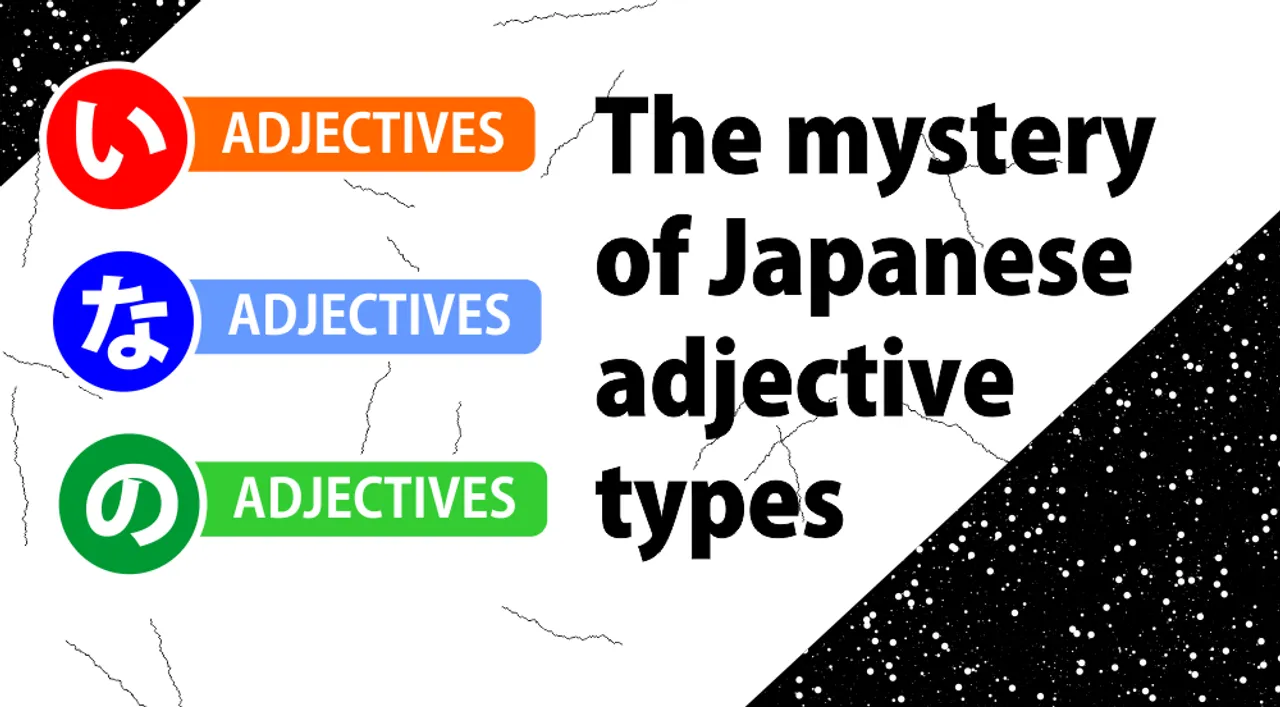
You might not believe this, but even though I’ve been fluent in Japanese for over 30 years and wrote five Japanese textbooks, it wasn’t until I learned Korean that I understood why Japanese had two types of adjectives, each with different rules for conjugation.
For reference, I will summarize what is taught in the Japanese From Zero! book series. There are three types of adjectives in Japanese.
The first is the i adjective. These always end with the hiragana い, and they can be used directly in front of a word to modify it. For example, kawaii (かわいい) means cute. To say cute cat: kawaii neko (かわいい猫). Omoshiroi (おもしろい) means interesting: omoshiroi hito (おもしろい人), interesting person. You’ll notice that we didn’t put anything in between the adjective and the noun neko or hito. We just threw the adjective directly in front of it.
The second type is the na adjective. These can end with practically any hiragana character, not just い — though they can also end in い. But for them to modify something, they require na, which is where they get their name. For example, shizuka (静か) means quiet. If I want to say quiet person, I cannot say shizuka hito. Because this is a na adjective, I must have na in the middle: shizuka na hito (静かな人), quiet person. The word for easy is kantan (簡単). But if I want to say an easy test, I cannot say kantan tesuto. I have to say kantan na tesuto (簡単なテスト).
How these adjective types are conjugated into negative form, past tense form and so on is different depending on the type. And the reality is that if you’ve studied Japanese on fromzero.com, or the old website yesjapan.com, or even with the Japanese From Zero! book series, you will learn about these adjective types, but you won’t learn why they exist.
It wasn’t until I was sitting in a Korean class, when I noticed that Korean also had two adjective types, that once I heard what they were called I immediately knew why Japanese has i and na adjective types. In Korean, they differentiate the types by calling them native Korean adjectives and Sino-Korean adjectives. Sino-Korean means Chinese-Korean, in case you didn’t know what Sino meant. I know I didn’t at first.
So Japanese na adjectives are Chinese in origin, and Japanese i adjectives are native Japanese. This means that when Chinese characters were introduced into Japan and Korea, Chinese adjectives were added and classified differently from the ones that already existed. Sometimes there are two adjectives that mean the same thing, but one is originally Japanese and one came from the Chinese infusion. The native Japanese i adjective for kind is yasashii (優しい), ending in い. But there is also a Chinese-origin na adjective that means the same thing: shinsetsu (親切). So if I want to say kind person the Japanese way, I would say yasashii hito (優しい人); I can put yasashii directly in front of hito. But if I want to use the Chinese-infused way, the na adjective way, I have to put na after it: shinsetsu na hito (親切な人).
Now, to make it even more interesting, let’s talk about non-Chinese adjectives added to Japanese. Nowadays, if Japan is going to add anything to Japanese, the new words mostly come from English, due to a strong relationship with Japan and English-speaking countries. And it turns out that all new adjectives added from English are also na adjectives. For example, sekushii (セクシー) means sexy: sekushii na hito (セクシーな人), a sexy person. Shai (シャイ): shai na kodomo (シャイな子供), a shy child.
Here’s the thing, though. Sekushii isn’t the only word in Japanese that means sexy. They also have a Japanese version: iroppoi (色っぽい). So I could say iroppoi hito (色っぽい人), and because it’s an i adjective I can connect it directly. But sekushii na hito is more common nowadays.
So if you ever learn a new adjective that’s written in katakana, which is primarily used for foreign-origin words, or written only in kanji with no hiragana い at the end, then it’s automatically a na adjective. Keep in mind that just because an adjective ends in い doesn’t automatically make it an i adjective. For example, kirei (きれい), which means pretty, ends in い but is normally written with two kanji (綺麗) and no hiragana い at the end. This is a na adjective. So for a pretty person you would say kirei na hito (きれいな人).
And finally, for very observant people: you might have noticed that I mentioned there were three Japanese adjective types but only talked about two. In the Japanese From Zero! book series we call the third type simply the no adjective, because it requires no when directly modifying. In reality, it’s just a noun being turned into an adjective. For example, nihon (日本) means Japan and kuruma (車) means car. If I just say nihon kuruma, it’s “Japan car.” But if I say nihon no kuruma (日本の車), now nihon, the noun, becomes an adjective: Japanese car. Kinzoku (金属) means metal and isu (椅子) means chair; kinzoku no isu (金属の椅子) means metal chair.
In the end, I think what surprises me the most is that it took me learning Korean to learn about this fundamental part of Japanese. Wait until you see what I learned about Korean once I started learning Chinese. We’ll save that for another time.
Also published on the Secrets of Japanese podcast .
Comments
Thank you. Your comment is waiting for George to read it, and will appear here once he has.
The spam check didn’t pass. Please try again.
That comment couldn’t be sent — it may be too long, or have more than a couple of links. Please try again.
Comments aren’t switched on yet.